
Infrastructure
Purpose-built, not assembled.
We did not stitch together off-the-shelf components and hope they would hold. The execution layer, data pipelines, and monitoring are all designed for this specific workload.
We run our own infrastructure because we need to know exactly what is happening at every layer. When something breaks at 9:35am, there is no vendor to call. That reality shapes how we build.
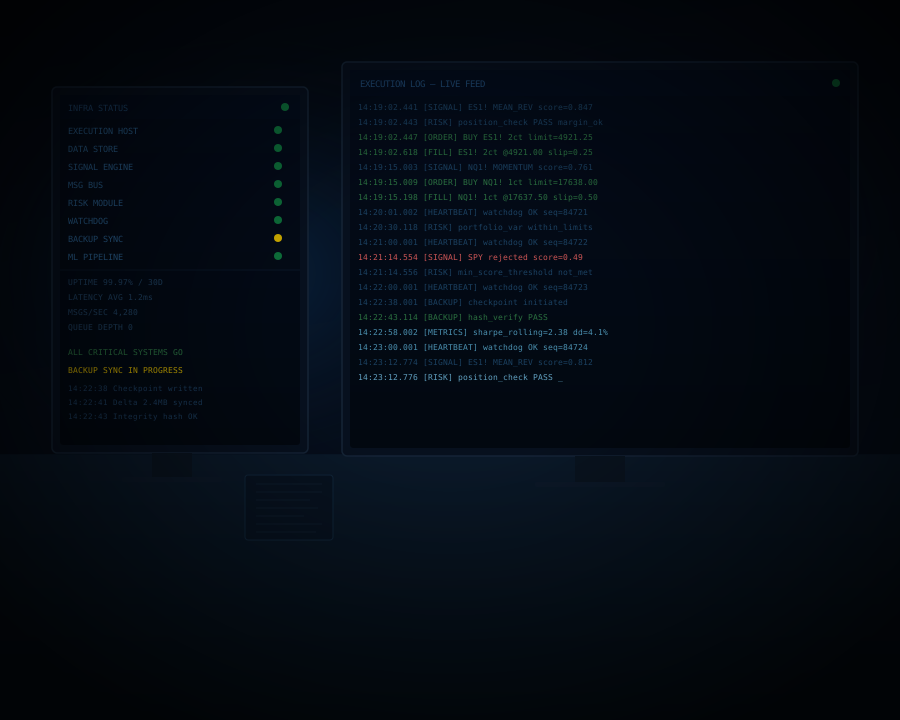
We did not stitch together off-the-shelf components and hope they would hold. The execution layer, data pipelines, and monitoring are all designed for this specific workload.
Research built on bad data produces bad conclusions. We validate at ingestion, audit on read, and treat any anomaly as a blocker until it is explained. There is no override.
New systems, strategies, and data sources are added within a defined architecture. If something requires restructuring the foundation to fit, that is a signal it is not ready.
The stack runs on dedicated hardware — execution isolated from research, storage centralized, everything connected through a structured message bus. Each component has a defined job and a defined boundary. When something fails, it fails in one place, not across the whole system.
Monitoring runs continuously. Every heartbeat, fill, signal, and risk check is logged. The watchdog catches silence. State is always observable, because a process you cannot inspect is one you cannot trust when it counts.
The goal is not a system that sounds sophisticated. It is a system that runs reliably at 9:30am every morning, fails gracefully when something goes wrong, and can be extended without dismantling what already works.
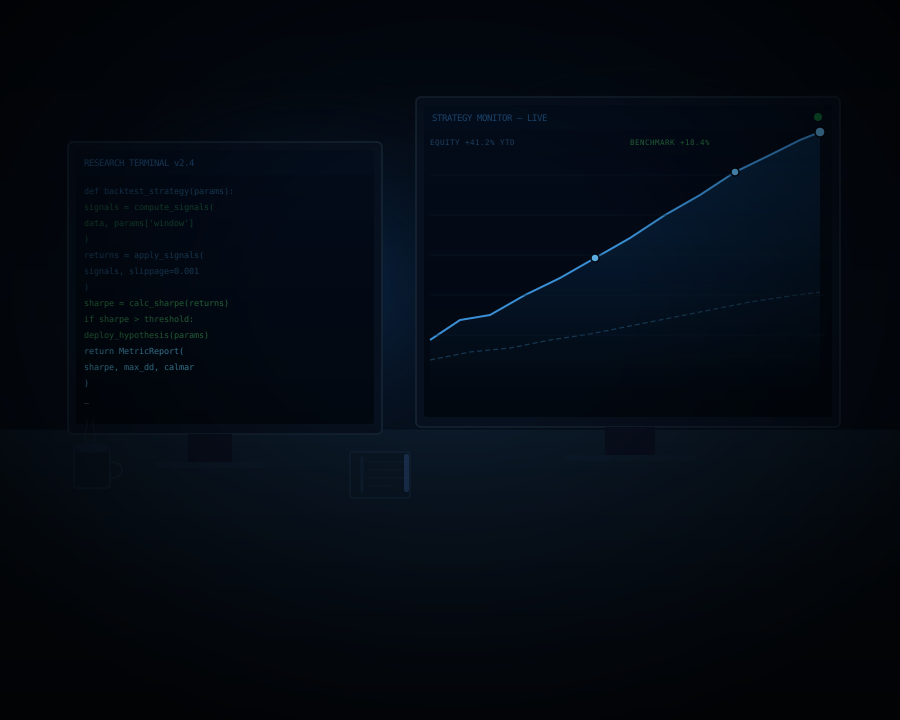
That principle applies across tooling, data architecture, execution systems, and the broader structure of the firm.